
Most professional tint shops charge $250-$600 depending on the number of windows, film quality (e.g., ceramic vs. dyed), and the vehicle type. In Bellevue, Washington, premium ceramic tints can reach $700+ for larger SUVs.

Vehicle Tint & Wrap Guides, Tips & Articles
Explore expert tips, how-to guides, and legal insights on window tinting, vinyl wraps, paint protection film, ceramic coating, and more.
Articles
Frequently Asked Questions
Ceramic tint generally blocks more heat and UV radiation than carbon. It also boasts better clarity and less signal interference. Carbon is a good mid-tier option, but if you want top performance, ceramic is usually worth the investment.
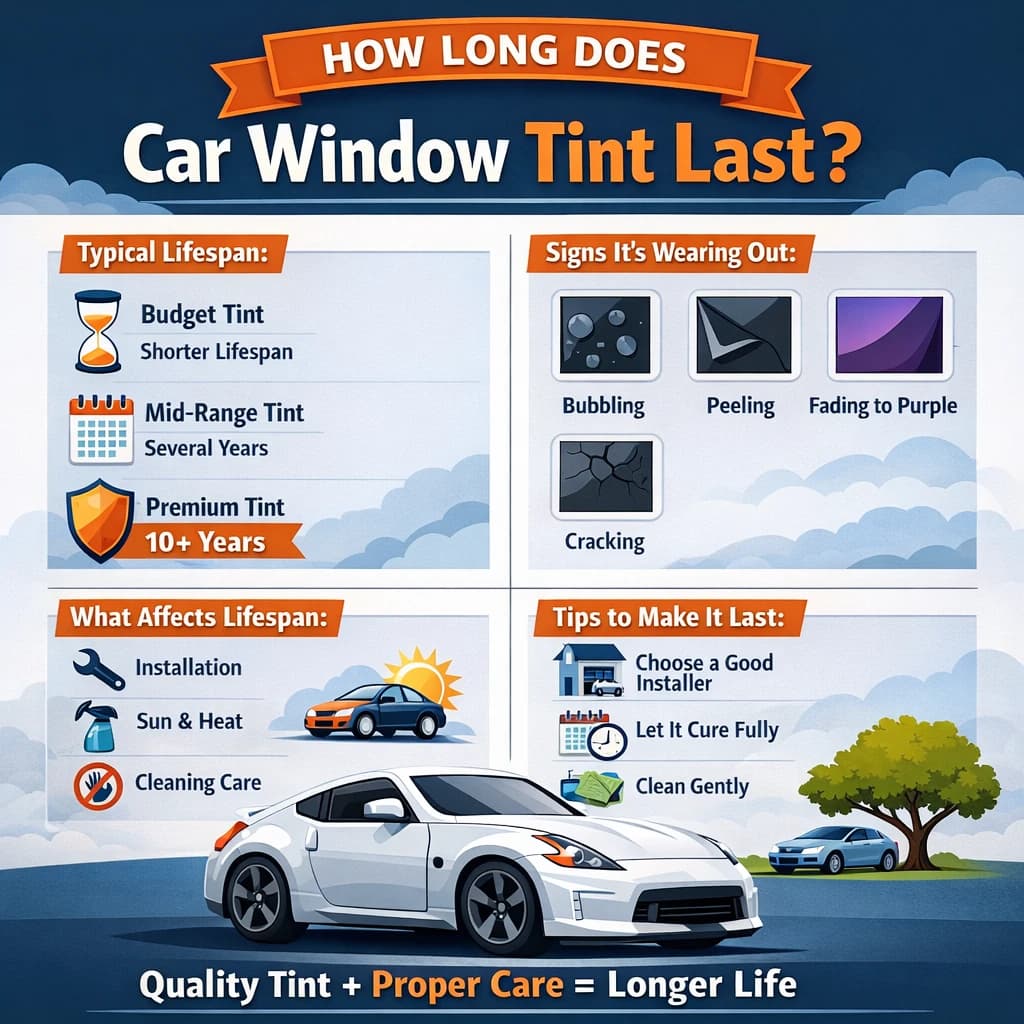
A high-quality tint from a reputable shop can last 5-10 years, especially if it's a ceramic or nano-ceramic film. Cheaper dyed films may fade in as little as 2-3 years.
Often, yes. Premium tints offer better heat rejection, more UV protection, reduced fading, and they tend to last longer without bubbling or discoloration. The upfront cost typically pays off over the life of your vehicle.
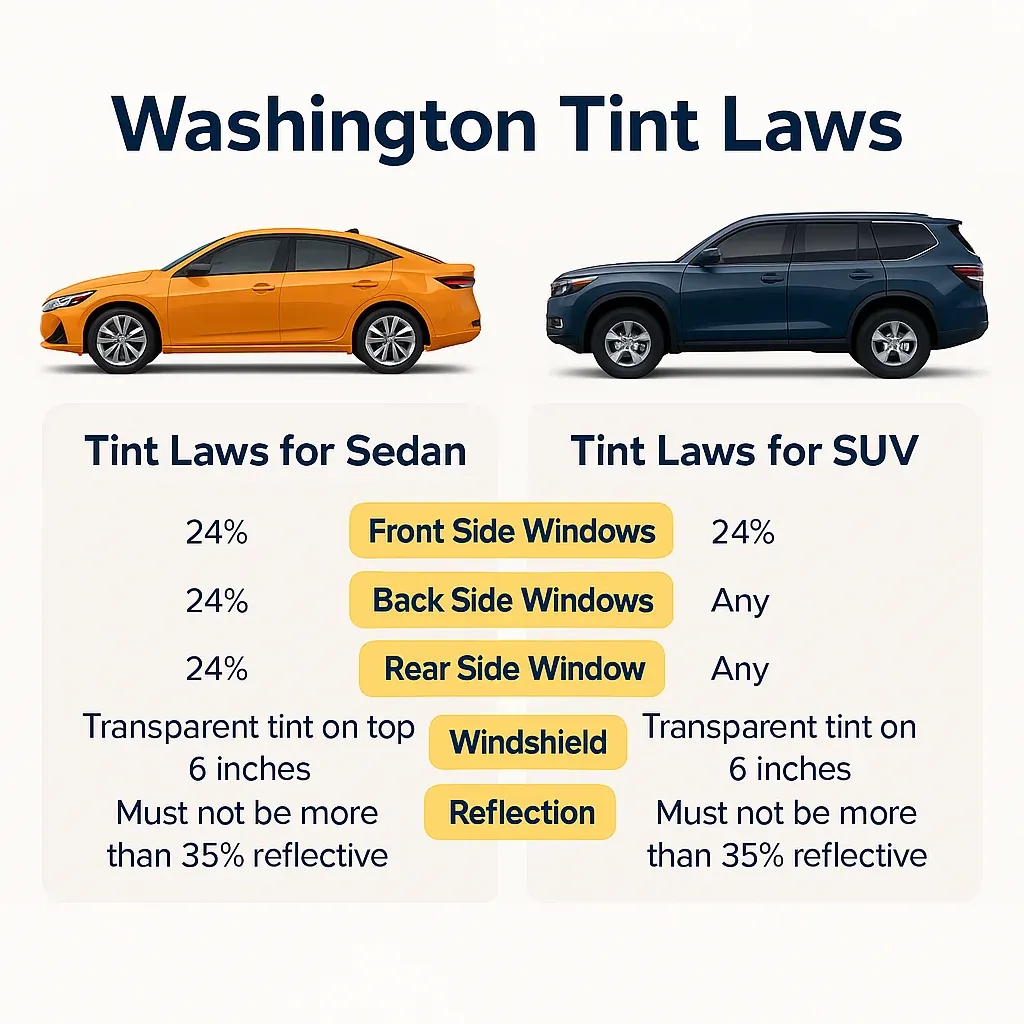
This depends on personal preference and local legal limits. In Washington, the front windows must be ≥24% VLT. Many drivers choose around 30-35% for a balanced look and good visibility.
35% tint allows 35% of visible light through, giving a moderate shade-dark enough to offer privacy and glare reduction, but still light enough to see through at night.